Hits and Misses

In the name of efficiency, I thought I might just do a roundup of anime that I’ve recently watched and my reactions thereof towards them. I know, I seem to be talking about anime a lot lately. I’ll have to write more about communism or something, otherwise this will turn into just another anime blog, though perhaps that ship has already sailed.

Stuff I liked:

  • Guin Saga is basically Conan the Barbarian without the misogyny or the gratuitous sex, which isn’t exactly a criticism. The setting is essentially a fantasy version of the Silk Road. A leopard-headed warrior with amnesia becomes the protector of two royal children on the run from their kingdom’s conquerors. This series shows that the author has extensively studied the dynastic politics of medieval Europe and all the backstabbing feels like the Byzantine Empire with magic thrown in. It’s based on a series of novels, and the author clearly knows quite a bit about European-style dynastic politics (you know, marriage alliances and whatnot).
    • Furthermore, politics in anime tends to be weirdly bloodless, by which I mean the causes and motives seem too insubstantial to deserve all the violence the characters are enacting. Not so for this series, the backstabbing and struggle for power feels more real. I think the opening gives you a good idea of what the series feels like. I like how you can’t tell who the bad guys are, although there aren’t really evil people in the series per se — it’s all just politics and who’s on what side. Don’t ask me why the titles are backwards in the video, though.
  • Now, as for The Twelve Kingdoms, it’s basically The Chronicles of Narnia mixed with Crouching Tiger, Hidden Dragon: a Japanese schoolgirl ends up in some weird kung fu fantasy version of China. It’s based on a series of novels as well, I think half of which have been translated into English. The fan trailer below does a fairly good job of showing the epic scope of the series, though the music is from Avatar: The Last Airbender. Granted, the main character is kind of whiny and homesick for the first three episodes, which is probably realistic for a proper Japanese schoolgirl from the late 80s who’s been dropped into fairyland, but it can get annoying. What’s amusing is that one of her companions is a genre-savvy fantasy fan who insists that she’s the Chosen One when all signs clearly point to the protagonist. Never fear, it doesn’t get metafictional and no 4th wall breaking occurs, it’s there so that fantasy girl’s unwarranted eagerness can serve as a foil to the heroine’s reluctance.
  • Shiki is basically Salem’s Lot set in a Japanese village, with a clear homage to Stephen King in one scene (the bedroom window scene if you were wondering). The series again is based on a novel and it’s also about vampires overrunning a small town. Unlike Salem’s Lot the series also shows things from the vampires’ perspective. King never showed his vampires hiding in terror from bloodthirsty lynch mobs or begging for their lives from their former neighbours as they’re dragged into the sunlight. There’s one particular scene where a vampiric little girl is being chased by a burly bearded vampire hunter shouting for her death which is just uncomfortable to watch. Although let me just say that the character designs are rather, err, unique in aesthetic. But the story is aces. And the book series was written by the same author of The Twelve Kingdoms.
  • Black Lagoon is a series about a smuggling crew trying to keep their company afloat in the South China Sea. Which makes it sound like Firefly on a boat but there are a lot more violent sociopaths in this show. It’s violent and exciting and cool, but it makes no excuses for the sort of people who’d actually live in the world of its setting.

Stuff that fell flat for me:

  1. Legend of the Legendary Heroes. Jesus, why did I even try? Google it for yourself if you must, but don’t make me think about it again.
  2. Bakumatsu Kikansetsu Irohanihoheto. It’s a show for history nerds, but the type of history nerds who obsess about names and dates. Watching it was like this: “On this day this historical figure did this thing in this place, but little did he know that so and so was actually in the same city just two days earlier doing the exact opposite thing. As for this other historical figure, he–” and at that point I stopped watching. I didn’t like having to do homework to watch a TV show. The music’s pretty good, though.
  3. Noein. The first episode is a collection of insipid clichés about an affectless male protagonist who listlessly enacts grotesque violence while cocooned inside a giant war machine and is inexplicably romantically intertwined with a girl too afraid to admit to her feelings for him. If you look at the edges closely, you’ll see the parts where the cookie cutter’s edge is starting to dull.
It is accomplished

I have finally watched all non-filler episodes of Bleach. I’ve been watching this show for most of the 21st century, so realize that I feel like I’ve hit some kind of personal milestone. A dumb and inconsequential milestone, but still one nevertheless. Like many other anime series in the genre of boys’ action (shounen, for the initiated), it dragged on for far too long, not least because the anime’s production of episodes quickly outpaced the manga’s story. Yes, the anime was based on a comic book series that wasn’t finished yet.

The ending didn’t feel essential. The final bit is basically a season-long epilogue, with the real ending being the one two seasons ago where the actual central villain was defeated.

But, it’s done now, so kudos to Kubo Tite for joining the ranks of creators who have successfully brought a long-running series to a close. I’m just glad I can finally cross this entry from my lifetime list of unfinished stories. Onwards to the next one.

The Hudsucker Negro

I saw The Hudsucker Proxy over the weekend. It’s a pretty fun film and I rather liked how it was an homage to old time movies. What was jarring was the literal Magic Negro, which felt peculiarly of its time (that time being 1994). Portraying a sympathetic black character would have probably gotten the director arrested as a Bolshevik agitator in the era the film is paying an homage to, whereas crypto-racism is at least more subtle in the 21st century. Therefore this character could only have existed at a time when white people know they shouldn’t be racist but are ignorant enough that their attempts at equal representation still come across as condescending.

The 90’s: Politically Correct enough to be ashamed of racism yet ignorant enough to perpetuate it anyway.

Princess Powerful

Another day, another anime. I don’t mean to make this blog entirely about what Japanese cartoons I’ve been watching but I just keep discovering neat series out there.

This time the show is called Princess Jellyfish, about the friendship between a female geek and a fabulous transvestite university student. The thing that I particularly like about this series is that it’s one of the few comedies I know of that doesn’t make jokes at the expense of the transgender character – you know, of the “ha ha she-male” type. In fact, the show presents the straight cisgender characters as being the maladjusted freaks because, well, they are.

I’ve only seen two episodes but I’m optimistic that the show won’t eventually have some conservative “change your appearance to become a worthwhile person” moral. You know, like in Beauty and the Beast. The ad copy is right, it really is a sweet story about learning to look beyond the surface. And the message doesn’t feel hackneyed and programmatic like it could easily have been.

Also, I like the opening. For the benefit of all and sundry, RehAdventures of Youtube provides a breakdown of each movie being referenced:

0:20 – Sex in the City
0:34 – Star Wars, with a dash of Gundam Wing at 0:44
0:48 – Singing [sic] in the Rain
0:55 – Mary Poppins
1:00 – Emperor of the North
1:03 – God of Gamblers
1:08 – James Bond
1:12 – Game of Death or for the newbies Kill Bill
1:18 – The Graduate
1:27 – Close Encounters of the Third Kind

Angels in the outhouse

So, I watched all thirteen episodes of Panty & Stocking with Garterbelt. It’s rather interesting to see anime taking on the aesthetics of the 90s era Ren & Stimpy/Rocko’s Modern Life weird gross out genre of cartoons, and marrying it with the adult (read: mostly puerile) themes of the grownup cartoons that showed up after. And obviously it resembles Powerpuff Girls the most in its art style.

The show is about a couple of foul-mouthed angels kicked out of heaven for their uncouth manner and licentious ways and having to earn their way back to the top by hunting down rampaging ghosts. From the description, one might think that it’s mostly an action series, and yes there are impressive sequences in that vein, but quite a few episodes are about the angels being too lazy to do their jobs. One episode is nothing but the angels watching TV and doing absolutely nothing of consequence.

The series is funny in a crass and lowest-common denominator sort of way, though the bodily function humour turns me off just like it did on Ren & Stimpy back in the day. There’s not much analysis I care to do on it, though I will note that this is the only anime from Gainax studio that I’ve seen. Admitting that means I’m not very hip since I gather Gainax is rather big with a lot of anime geeks.

Some choice quotes, taken out of context:

“You’d better not get fat again, otherwise you’ll need to be good at blowjobs.”
“Fuck, you’re a ghost? I can’t believe I let you finger me.”
”You both need to stop spending money on bullshit. You’re angels, not hipsters.”

Full metal blitzkrieg

https://www.youtube.com/watch?v=BOm_PAI2goo

I have just watched forty (40) episodes of Fullmetal Alchemist: Brotherhood in the space of three days. I went to the laundromat afterward and found it bizarre to hear English being spoken there. It feels rather like the time I almost answered the phone as Ranma Saotome.

The series is by no means perfect – it relies too much on coincidence in telling the story, for one thing – but I can dig what it’s generally shooting for. It’s not everyday a fantasy series has protagonists who are basically in the SS, after all. And the stuff on alchemy shows rather a bit of research was done, which I appreciate.

Okay, I admit that it starts quite slow. I thought it would just be some generic pubescent boy fantasy bildungsroman, i.e.  the genre called shounen in Japan. Basically, boy has a quest, he fights some bad guys, he improves his skill and makes friends, and so on tirelessly repeated until every last cent is squeezed out of the formula. But then the fourth episode happened and it showed that actual stakes existed in this fictional universe. And that was it for me, I just kept watching and watching.

So in closing, I must conclude that I am fascinated by magic fascists.

The Sadness of Sweetness

If the history of workers’ rights was an object then it would be a seesaw tipping between capital and labour. Sometimes capital has the upper hand, sometimes labour does. Well, labour is never dominant but sometimes it doesn’t entirely suck to be a worker.

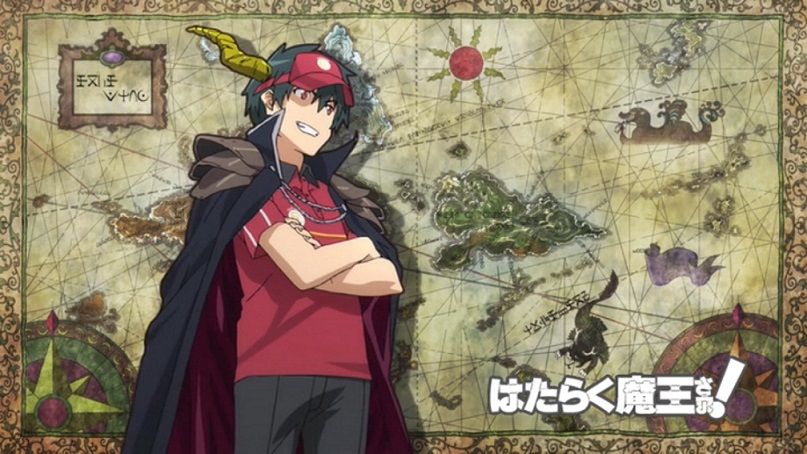
The seesaw of workers’ rights occurred to me as I was watching The Devil is a Part-Timer, which is an anime about Satan being kicked out of his kingdom and exiled to modern Japan, where to survive he has to work part-time at McDonald’s.

Demon Lord of McDonald's

The series is hilarious. Watching the Adversary coming home exhausted to his shithole apartment panicking about how he’s going to pay for his new refrigerator is comedy gold. A lot of the stories are in that vein: The Devil gets promoted to shift manager. The Devil goes on a date with a co-worker. The Devil gets scammed by a door to door salesman.

The series is funny, but I couldn’t help feeling put off by the implicit normalization of living on the economic precipice. Lots of people live pay cheque to pay cheque and it’s probably not funny from their point of view. There are moments recognizing that precariousness in the series, such as the utter loneliness one of the otherworldly refugees suffers from or the way something as simple as free noodles is an incredible gift to the working poor characters.

I’m reminded of Welcome to the NHK, which is about what one possible reaction to the modern world: complete and almost total withdrawal. On the one hand, what does retreat do in improving one’s lot? On the other hand, what does struggling do in improving one’s lot as well? Because The Devil sure works his butt off in The Devil is a Part-Timer but he still isn’t even a full-time worker yet. And goodness knows those poor Kentuckians trying to make a living just seem to be digging themselves in deeper. The article is a decade old, but The Onion hit the target dead-on: “Report: Poor People Pretty Much Fucked”.

Is this the new normal, then? Is this life what Thatcher meant when she said There Is No Alternative? Because it seems that in this brave new world even our fantasies participate in our own subjugation.

I don’t mean to criticize the anime for not offering a solution. Comedy can be a site of political awareness, but by its very nature it can never be a site of struggle. It’s always too easy to say that it’s all just a joke. But comedy and art in general can still be a mirror to the society it depicts, and for The Devil is a Part-Timer, that society is trying hard to laugh at its own misery.

New Game Minus

I just got Dragon’s Dogma, which basically means for the next month I’ll only be leaving the house for work and buying groceries. Mostly I got it because it was free on PS+ and I was hoping for some kind of hybrid of fighting game combat and RPG adventuring like I mentioned here. I didn’t get my wish, but I do still like the game.

The combat so far reminds me of Dynasty Warriors. There are special moves but mostly I’m hacking and slashing over and over. Possibly I should try out the rogue or the mage. I’ve only had one God of War fight against a gigantic beast and I was mostly wondering what the hell was going on, after which I won. Fights don’t seem especially difficult yet so I’m thinking I’ll try Hard mode. On a scale of one to ten, ten being Tekken‘s online mode, I would rate the combat difficulty as a three.

However, the game is still pretty damn fun. I’m a sucker for RPGs, especially the open world type, and this hits that sweet spot of stamp collecting and mathematical progression. It’s not a game for playing for short periods, though, you need several hours to properly get into the groove.

The pawn system is great, at least in theory. Your character has a sidekick and can also hire more minions, which are actually the sidekicks created by other players. Pawns only level up when their creator plays so you’re forced to keep replacing your employees. However, most players either half-ass the design of their pawns or they should be arrested for crimes against fashion. I was up until 1 AM last night looking for pawns to hire and I freely admit I was entirely superficial in my hiring criteria. “Too fat. Too short. Name has numbers in it. Outfit looks like shit.”

Speaking of which, who else out there just got Dragon’s Dogma on PS+? Because I hereby propose a pawn exchange. Someone hire my pawn, I spent a long time customizing her to get the right look. She’s a Strider with only the basic gear so far, but I love her like my own daughter. I release her into your care.

PSN: Armacen

Hail to the King

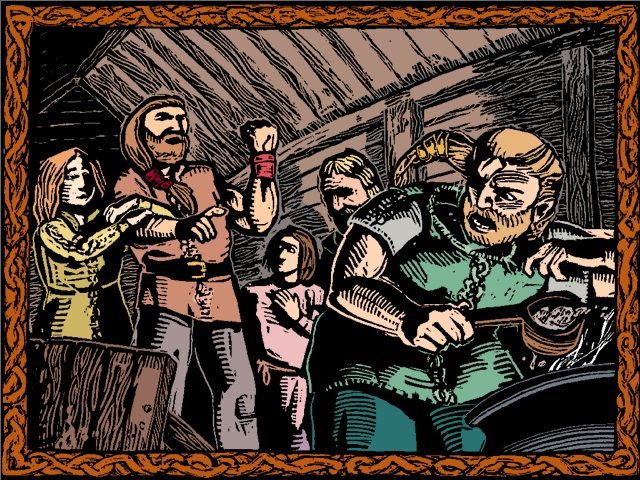
You catch a clan member stealing food - what do you do?

I’ve recently gotten into the computer game King of Dragon Pass. You play as the chieftain of a clan of Iron Age barbarians. It’s set in a fantasy universe with dragons and whatnot but it’s still very well-researched with regard to the attitudes and material life of your people. The broad mishmash of Celts/Gauls/Saxons/Norse that the game is drawing inspiration from feels realistic. Wealth is measured in cattle and you must continually propitiate the gods for political legitimacy. Also you can do stuff like take out a lawsuit on a ghost haunting a house.

The game society’s gendered division of power is not so overwhelmingly patriarchal but it doesn’t feel like a sop to political correctness. The way it’s presented in the game feels perfectly plausible and shows that the developers studied their history and/or anthropology. Using female slaves as currency like the Irish did would have been kind of interesting, though – "You want misogyny? Have some goddamn misogyny you unwashed neckbeards!" I imagine the developers shouting.

It’s a very unique take and practically a game in its own genre. How does one classify this? A strategy roleplaying fantasy game, perhaps? There are no real time elements and when you’re not picking what crops to plant then you’re just clicking on choices in dialogue trees. But the roleplaying narrative the game creates for you is so involving that you feel the need to keep going just to see how your clan will fare.

Still, despite my enjoyment, lately I’ve plateaued on the game. I’ll be back and at it soon enough, though. There are trolls out there that need slaughtering, and who else is going to do it?

Punch It

One-Punch Man and Friends

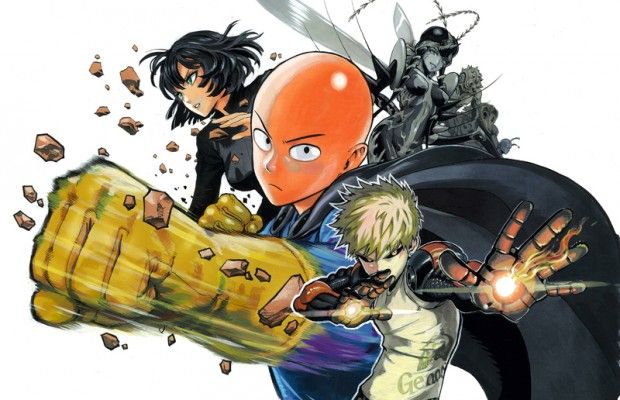
I recently main-lined the manga One-Punch Man, about a superhero who’s so idiotically overpowered he annihilates his enemies in one blow. By the start of the story he’s actually pretty bored with his work. The series is freaking hilarious, it’s got an indie comics sensibility with wacked out heroes like Licenseless Rider, whose only “superpower” is riding a bicycle, and villains like Fuhrer Ugly and a thinly-disguised refugee from Dragonball Z. I feel like I’m reading a Japanese version of The Tick except the story is actually going somewhere.

Anyway, I suggest checking it out.